What is radon mitigation?
Radon mitigation reduces the concentration of radon gas inside a building. A common system uses a fan and pipe to draw soil gas from beneath the foundation and release it outside, rather than allowing it to accumulate indoors.
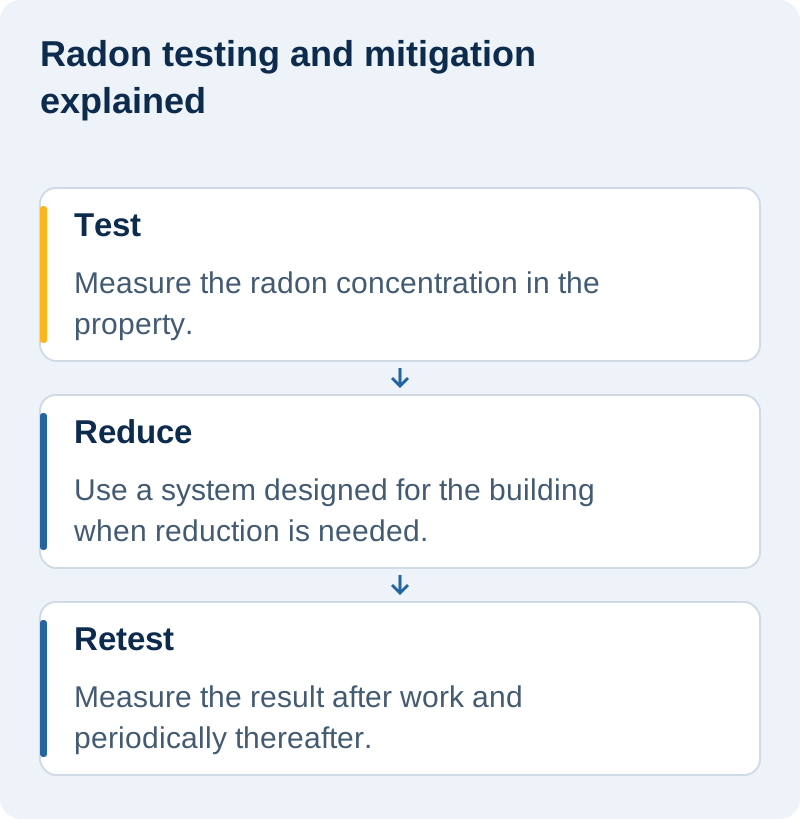
Foundation type matters. A slab, basement or crawl space can require a different collection method. Sealing openings can support a system, but the EPA does not recommend sealing alone as a reliable reduction method.
Source: EPA Consumer's Guide to Radon Reduction.
At what radon level should you take action?
4 pCi/L or higher is the EPA's action level. The EPA also recommends considering reduction between 2 and 4 pCi/L. This is not a boundary between safe and unsafe air.
| Radon result | EPA guidance |
|---|---|
| 4 pCi/L or higher | Take action to reduce radon. |
| 2 to below 4 pCi/L | Consider reducing radon. |
| Below 2 pCi/L | Lower exposure carries less risk, but no known exposure level is risk-free. |
Use the appropriate testing protocol to interpret a short-term result and determine whether follow-up measurement is needed.
Source: EPA action-level guidance.
How do you find a radon mitigator in Pennsylvania?
Start with the Pennsylvania DEP Radon Services Directory and check that the provider's current certification covers mitigation. DEP maintains separate lists for testing, mitigation and laboratory services.
Our company directory helps you explore published services and areas served. The official DEP record remains the place to check certification.
Source: Pennsylvania DEP Radon Services Directory.
Do you need to test after installation?
Yes. Test after the system is installed to check that it reduced the radon concentration. A running fan or a pressure indicator cannot replace a radon measurement.
Sources: EPA radon guidance and EPA reduction guide.
What does a radon result measure?
pCi/L measures radon concentration in air. It is different from the pressure reading on a mitigation system gauge. A laboratory report or radon monitor provides a concentration over a test period; the gauge only indicates system operating conditions.
Use the testing guide for duration and placement, the system guide for foundation-specific methods, and the maintenance guide for ongoing checks.