Should a radon mitigation fan run all the time?
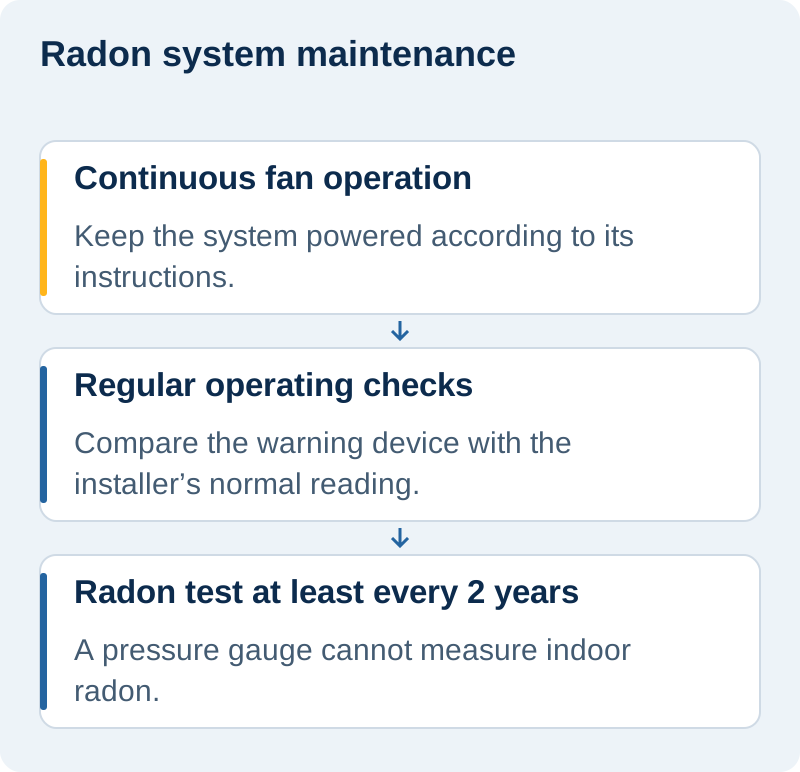
Yes. A fan-based radon reduction system is designed for continuous operation. Follow the installer's instructions and keep the system powered; switching it off as a routine energy-saving measure stops its intended operation.
What does the radon manometer measure?
A manometer measures pressure difference in the system, not the indoor radon concentration. Its liquid levels or reading should be compared with the operating information recorded by the installer. There is no single ideal reading for every home or fan.
| Observation | What it tells you | Next step |
|---|---|---|
| Fan is running | Power and some operation are present | Use radon testing to determine the indoor result. |
| Manometer changes from its normal reading | System operating conditions may have changed | Compare with the installer’s baseline and arrange assessment if needed. |
| Alarm or fan stops | The warning device or system needs attention | Follow the supplied instructions and contact the system provider. |
| Radon remains elevated after work | The desired concentration has not been demonstrated | Have the installer investigate the system and arrange appropriate retesting. |
| Major foundation or ventilation changes | Earlier building conditions may no longer apply | Reassess testing and system performance. |
Operating and follow-up guidance: EPA consumer guide.
When does a radon fan need replacement?
Replace a fan when assessment confirms that it has failed or cannot meet the system’s operating requirements. Noise or a changed gauge reading can prompt an investigation, but neither establishes that the fan alone is the cause. The replacement must fit the required airflow and pressure as well as the installation.
A warranty period and an expected service life are different. Keep the model and installation date with the system records so a repair provider can identify compatible parts.
Can I use any replacement fan?
No. Fan selection belongs to the system design. An apparently similar unit may have different pressure and airflow characteristics. Keep the original system documentation and have a qualified provider evaluate the appropriate replacement.
Which listed companies publish repair services?
Enviroquest publishes service on existing systems, and Oak Leaf Environmental's network profile lists radon fan replacement and system inspections. Those are more specific repair signals than a general new-installation listing.
Read the Enviroquest profile or Oak Leaf profile for coverage and sources. A follow-up radon test measures the outcome after the work.
How often should you retest a home with a radon system?
At least every two years is EPA’s recommendation for checking that levels remain low. Retest sooner when a system problem, major alteration or change in occupied floor level makes the earlier result less representative.
How long does a radon fan last?
Five years or more is the service-life guidance given by EPA. It is not a fixed replacement deadline. A working older fan still needs a functioning warning device and periodic radon measurements; a newer fan can require attention if performance changes.
What should you do if the fan stops?
Arrange service and follow the installer’s operating instructions. Check the accessible power supply and warning indication without opening electrical components. Tell the provider whether the fan is silent, unusually noisy or showing a different gauge reading. Do not fit a larger fan simply to make the gauge change.
How much does a replacement fan cost?
About $200 to $350 including parts and labor is EPA’s published national replacement benchmark. The model, access and local labor determine the actual charge. More extensive pipework or electrical repairs are separate from a straightforward fan replacement.
Maintenance intervals, fan life and replacement benchmark: EPA system-operation guidance. Building changes: EPA retesting guidance.
Sources reviewed September 22, 2026.