How does a radon mitigation system work?
A radon mitigation system reduces the amount of radon entering or remaining in a building. A common approach creates suction beneath the foundation, collecting soil gas and venting it outside through purpose-designed pipework.
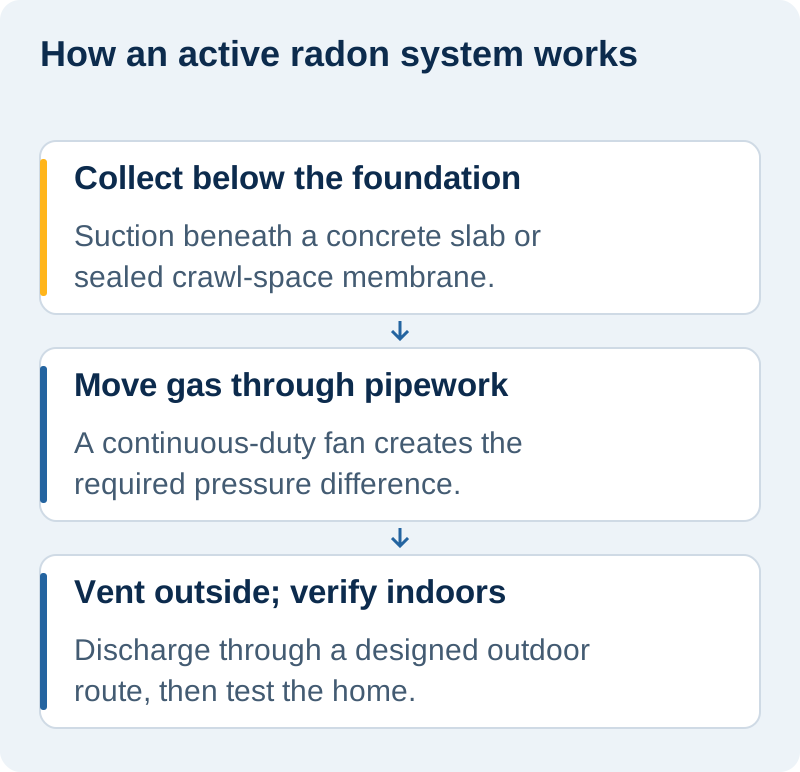
An active system uses a fan. A passive system relies on natural air movement. The foundation, collection conditions and test result determine what is appropriate; the strongest available fan is not automatically the right design.
| Approach | Where it may fit | Key distinction |
|---|---|---|
| Active sub-slab depressurization | A home with a concrete slab or basement floor | A fan draws gas from beneath the slab. |
| Sub-membrane depressurization | An exposed-soil crawl space | A sealed membrane provides a collection barrier over the soil. |
| Sump or drain-related suction | A suitable existing sump or drainage arrangement | Site conditions and sealing determine whether the arrangement can be used. |
| Passive activation | A building with suitable radon-resistant pipework | Adding a fan still requires assessment of the underlying collection system. |
| Specialist water treatment | A property with a confirmed radon-in-water issue | Water treatment is a separate investigation from soil-gas collection. |
Methods: EPA Consumer's Guide to Radon Reduction.
Can sealing the basement stop radon?
Sealing alone is not a reliable radon-reduction method. It can support an engineered system, but openings can change over time and sealing does not establish control of soil-gas entry throughout the foundation.
Likewise, a dehumidifier addresses humidity. It is not a substitute for a radon reduction system. Test the radon concentration rather than inferring it from a drier basement or a less noticeable odor; radon itself is odorless.
Does a passive radon system always need a fan?
No. The radon result determines whether further reduction is needed, but a passive system cannot be assumed effective without testing. Where activation is appropriate, the installer should evaluate the pipe route and collection arrangement before adding a fan.
Why might a house need more than one suction point?
A single collection point may not influence every foundation area. Separate slabs, additions or limited movement of air beneath a floor can require a different collection design. Diagnostic assessment helps distinguish a collection problem from a fan problem.
How do you know the system worked?
A post-installation radon test establishes the resulting concentration. An operating fan and a pressure reading are useful operating signs, but neither reports the radon level in the occupied space.
The testing guide explains the difference. The maintenance guide covers operating checks after the installation, and the cost guide separates price references from property-specific work.
What are the main parts of an active radon system?
A collection point, vent pipe, continuously operating fan and warning device work together to move soil gas away from the building. Seals around openings support the collection system. The warning device indicates operating conditions; the post-installation test measures the indoor radon level.
How does a crawl-space system differ from a basement system?
A crawl-space system can collect gas beneath a sealed membrane instead of beneath a concrete slab. The membrane covers exposed soil and is sealed around edges and penetrations. A house with both foundation types may need both collection approaches.
What happens during installation?
The provider assesses the building, installs the collection and venting system, and arranges a test of the result. Existing finishes, foundation sections and the external route affect the work sequence.
- Review the radon result and inspect foundation and pipe-routing options.
- Evaluate where gas can be collected beneath the slab or membrane.
- Install and seal the collection points and pipework.
- Connect the appropriate fan and system warning device.
- Document operation and complete post-installation testing.
Can a new home’s passive system be upgraded?
Yes. A suitable passive system can be activated with a fan when testing shows further reduction is needed. The installer must assess the existing route and collection arrangement. New construction is not proof of a low radon level; EPA recommends testing after moving into a home with a passive system.
New homes: EPA radon-resistant construction guidance. Installation methods: EPA consumer guide.
Sources reviewed September 22, 2026.