How long does a radon test take?
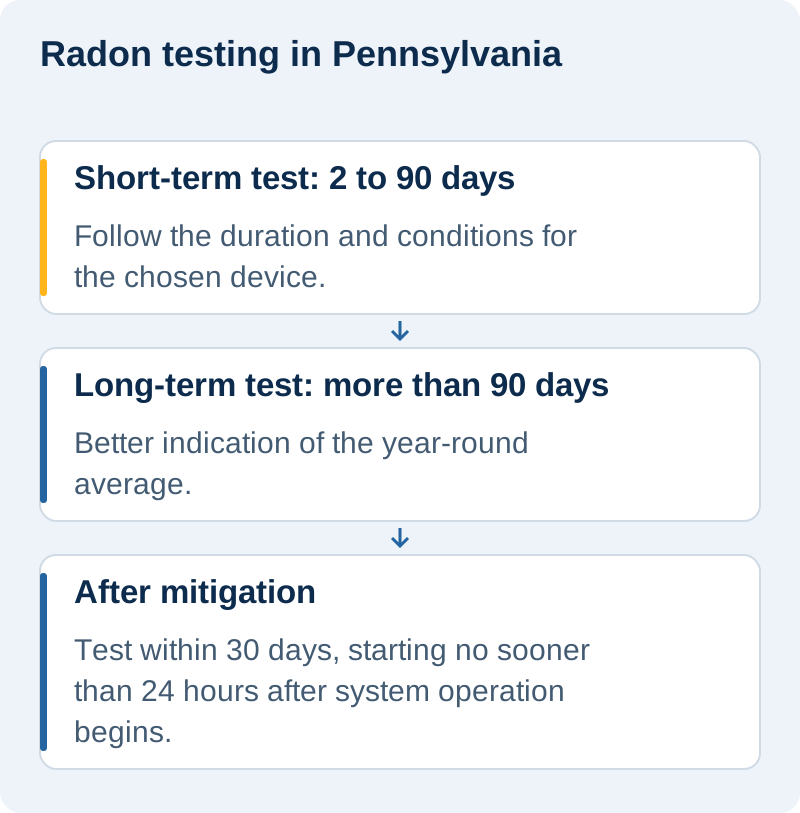
Short-term tests run from 2 to 90 days; long-term tests run for more than 90 days. The test device and purpose determine the protocol. A long-term measurement gives a better indication of the home's year-round average, while a short-term test provides an earlier result.
| Test type | Useful for | Important limit |
|---|---|---|
| Short-term kit | An initial measurement over the specified test period | Results can vary with season and building conditions; follow-up may be needed. |
| Long-term device | Understanding the longer-term average | Does not fit a short transaction deadline. |
| Professional continuous monitor | Measurements under a documented professional protocol | It remains a radon test, not a mitigation system. |
| Post-mitigation test | Measuring the result of installation or repair | A manometer or fan-status light cannot substitute for it. |
Duration and test-selection guidance: Pennsylvania DEP consumer guide.
What does a result of 4 pCi/L mean?
4 pCi/L is the EPA action level for reducing radon. It is not a dividing line between safe and unsafe exposure. EPA also advises considering reduction from 2 to below 4 pCi/L.
The result needs to be interpreted in the context of its test period and protocol. PA DEP's consumer guidance recommends action based on a long-term result or the average of two short-term tests at or above the action level. Real estate testing has its own protocols, so do not improvise a sequence that conflicts with the transaction's required procedure.
Sources: EPA action level and PA DEP testing guidance.
Can I test my own Pennsylvania home?
Yes. Homeowners can use a test kit according to its instructions. Follow the specified placement, exposure time and return procedure, and use an appropriate certified laboratory. If hiring a tester, check the testing category in the PA DEP directory; a mitigation listing is not automatically a testing credential.
Can weather or open windows affect the test?
Yes. Ventilation and weather can affect the conditions being measured. Follow the device's closed-building instructions and applicable testing protocol. Moving the device or opening windows to lower a reading undermines the usefulness of the result.
Do I need another test after mitigation?
Yes. A post-installation test measures whether the system reduced radon. The installer should provide the applicable timing and operating instructions, and subsequent tests can identify changes after building alterations or system problems.
A system pressure indicator measures pressure, not radon concentration. Keep the final test report as well as the system documentation.
Where can I find testing near me?
Find testers in the company directory, your local area page, or the PA DEP testing directory. Profiles identify published testing services; verify the current testing credential and the required measurement protocol.
How much does a home radon test cost?
A home test kit costs about $20 to $30 under PA DEP’s January 2026 guidance. A professional test is a separate service. For a laboratory kit, check the analysis fee and return instructions before starting.
Source: Pennsylvania DEP, 2026.
Where should a radon test be placed?
Use the lowest level suitable for the purpose of the test, away from drafts, heat and humidity. A lived-in basement may be the right level for routine homeowner testing; a transaction test may need the lowest level suitable for occupancy. Follow the device instructions and the applicable protocol.
- Do not put a test in a kitchen or bathroom.
- Keep the device undisturbed for the complete test period.
- Record the test dates, floor and room so later results can be interpreted in context.
- Follow the required closed-building conditions for a short-term test.
Placement and transaction protocols: EPA Home Buyer’s and Seller’s Guide, 2024.
When should testing happen after mitigation?
Within 30 days of installation, but not sooner than 24 hours after the system starts operating, is EPA’s post-mitigation timing guidance. Testing duration then depends on the selected method. EPA also recommends an independent follow-up measurement.
| Report item | Why it matters |
|---|---|
| Result and units | pCi/L is a concentration, not a pressure-gauge reading. |
| Start and end times | A few-hour reading cannot be treated as a completed multi-day test. |
| Room and floor | An upstairs result does not automatically describe a finished basement. |
| Device and laboratory or tester | Identifies the measurement method and responsible service. |
Post-installation timing: EPA reduction guide. Retesting guidance: EPA home testing advice.
Sources reviewed September 22, 2026.